Demystifying the House Edge in Casino Games: What Every Player Should Know
Casino gaming is filled with excitement, anticipation, and the chance for lucky wins. But behind every flashy slot machine and buzzing roulette wheel lies a fundamental concept that shapes every bet placed: the house edge. Whether you’re a casual player or a seasoned gambler, understanding the house edge is crucial for making informed decisions and managing expectations. In this comprehensive guide, we’ll demystify the house edge, explain how it works across different games, and reveal why it matters for anyone who steps onto a casino floor or logs into an online casino.
What is the House Edge? Breaking Down the Basics
The house edge is the statistical advantage that the casino holds over players in any given game. Expressed as a percentage, it represents the average profit the casino expects to make from each bet over the long term. For example, a house edge of 5% means that, on average, the casino will keep $5 for every $100 wagered.
This edge is built directly into the rules and payouts of each game. It’s not cheating—rather, it ensures that casinos remain profitable while still allowing for individual wins. Unlike a fixed fee or commission, the house edge is subtle and only reveals itself over thousands of bets, which is why some players can walk away big winners even when the odds are stacked against them.
.png) Key facts:
- The house edge ensures long-term casino profitability.
- It varies dramatically between different games and even different bets within the same game.
- Over short periods, luck can overcome the house edge, but over time, the math always prevails.
Key facts:
- The house edge ensures long-term casino profitability.
- It varies dramatically between different games and even different bets within the same game.
- Over short periods, luck can overcome the house edge, but over time, the math always prevails.
How the House Edge is Calculated: The Mathematics Behind the Magic
To understand the house edge, it helps to look at how it’s calculated. The formula is straightforward:
House Edge = (Average Loss / Initial Bet) x 100%
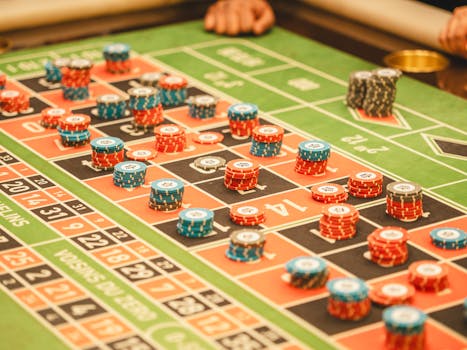
Let’s consider American roulette as an example. The wheel has 38 pockets (numbers 1–36, 0, and 00). If you bet $1 on a single number, you have a 1 in 38 chance of winning $35 (plus your $1 bet back), and a 37 in 38 chance of losing your $1.
Expected Value = (1/38 x $35) + (37/38 x -$1) = $0.921 - $0.974 = -$0.053
So, the average loss per $1 bet is about 5.3 cents, giving roulette a house edge of 5.26%.
This methodology applies across all games, though the calculations can become more complex with games like blackjack, which involve player decisions that can affect the edge.
Three key statistics: - American roulette: 5.26% house edge - European roulette: 2.7% house edge - Blackjack (with basic strategy): as low as 0.5% house edgeHouse Edge Across Popular Casino Games: A Comparative Overview
Not all games are created equal when it comes to the house edge. Some offer better odds for players, while others favor the casino more heavily. Here’s a comparative table summarizing the house edge for some of the most popular casino games:
| Game | Typical House Edge | Skill Involved? | Notes |
|---|---|---|---|
| Blackjack | 0.5% – 2% | Yes | With basic strategy; varies by rules |
| European Roulette | 2.7% | No | Single zero wheel |
| American Roulette | 5.26% | No | Double zero wheel |
| Baccarat (Banker bet) | 1.06% | No | Lowest edge for a standard bet |
| Baccarat (Player bet) | 1.24% | No | Still low house edge |
| Craps (Pass Line) | 1.41% | No | Lowest edge on main bet |
| Slot Machines | 2% – 15% | No | Varies widely by machine |
| Keno | 20% – 30% | No | One of the highest house edges |
This table highlights why it’s vital for players to understand which games (and which bets) offer the best value for their money.
The Role of Volatility and Payout Structures
While house edge is a key statistic, it’s not the only factor that shapes a player’s experience. Volatility (or variance) and payout structures also play significant roles.
Volatility refers to how much the outcomes of a game fluctuate in the short term. High-volatility games, such as slot machines and keno, can produce long losing streaks punctuated by the occasional big win. Low-volatility games, like baccarat or blackjack, offer more consistent—if smaller—returns.
Payout structures determine how often and how much players win. For example, slot machines often have a higher house edge but the allure of massive jackpots keeps players spinning. In contrast, games like blackjack may have a low house edge, but the potential winnings per hand are relatively modest.
Interesting fact: According to the American Gaming Association, more than 60% of casino floor space in the U.S. is devoted to slot machines—despite their higher average house edge—because players are drawn to their excitement and jackpot potential.
Myths and Misconceptions about the House Edge
Many casino myths stem from misunderstandings about the house edge. Let’s bust a few of the most common ones:
Myth: "The house edge means you can’t win." Reality: You can absolutely win in the short term—the house edge just predicts the casino’s average profit over time. Individual sessions can defy the odds.
Myth: "All bets in a game have the same house edge." Reality: Many games, especially roulette and craps, offer a range of bets with different odds and house edges. For example, betting on "0" in roulette has the same house edge as betting on red or black, but the payouts and win probabilities differ.
Myth: "A hot or cold streak changes the house edge." Reality: Each spin, roll, or hand is statistically independent. Past outcomes don’t affect future results, so the house edge remains constant.
Myth: "Skilled play can eliminate the house edge." Reality: In games of pure chance (slots, roulette), skill can’t influence results. However, in games like blackjack or video poker, optimal strategy can reduce the house edge to nearly zero—but never in favor of the player, except in rare cases like card counting.
How to Use House Edge Knowledge to Your Advantage
Knowing the house edge can help you make smarter choices at the casino. Here’s how savvy players use this information:
1. Game Selection: Choose games with a lower house edge to maximize your bankroll’s longevity. For example, opt for blackjack or baccarat over keno or slots. 2. Bet Selection: Within games, pick bets with the lowest house edge. In craps, the "pass line" and "don’t pass" bets are far better than "proposition" bets. 3. Bankroll Management: Understanding the house edge helps set realistic expectations. If you know you’re likely to lose a certain percentage over time, you can plan your play accordingly. 4. Strategy: In skill-based games, learning optimal strategy can reduce the house edge. For instance, basic strategy in blackjack or optimal play in video poker can turn a mediocre game into one with a razor-thin house edge.According to a 2023 survey by the UK Gambling Commission, seasoned players who understood house edge concepts reported longer play sessions and higher satisfaction, even when losses occurred, because their expectations were aligned with reality.
The Lasting Impact of House Edge on Casino Play
The house edge is not a secret trick nor an insurmountable barrier—it’s the mathematical foundation that makes casino gaming sustainable for both operators and players. By understanding how it works, you can make more informed decisions, stretch your entertainment dollar, and enjoy casino games for what they are: a thrilling blend of luck, strategy, and mathematics.
Whether you’re spinning the roulette wheel, doubling down in blackjack, or hoping for a lucky slot jackpot, remember that the house edge is always present. Use this knowledge to play smarter, have fun, and keep your casino experiences positive.